Consultation room at Liposser, Guadalajara

46 questions, 46 full answers

Everything people ask
before surgery,
answered in full.

They are written the way they are actually asked, not the way they look tidy in a brochure. The uncomfortable ones are here too: how much it hurts, what it costs, what can go wrong, and the cases where you will be told not to have surgery at all.

Block 01

Before you decide

How do I know whether I need surgery or whether a treatment is enough?
It comes down to what is excess and what is loose. If the problem is localised fat under firm skin, there is a surgical route and sometimes a non-surgical one as well. If the problem is skin that hangs, no machine removes it: excess skin is dealt with by cutting it out. And if the problem is overall weight rather than contour, neither applies — losing the weight comes first. The assessment exists precisely to tell you which of the three you are in.
Is there a right age for surgery?
There is no age, there are conditions: being an adult, holding a stable weight, being healthy enough for anesthesia, and having a realistic expectation of what the procedure can do. Patients in their twenties are operated on and so are patients in their sixties. What changes with age is not permission, it is the quality of the skin, and that does change what result is reasonable to expect.
Do I have to lose weight before surgery?
If you are far from a stable weight, yes. Contouring surgery sculpts what is there; it is not a treatment for obesity. Being operated on in the middle of losing or gaining means the result moves afterwards, and you end up feeling you paid for something that came undone. What is asked of you is not an ideal weight, it is a weight you can hold without extraordinary effort for a few months.
Should I wait if I want to get pregnant?
For the abdomen and the breasts, yes, waiting makes sense. A later pregnancy stretches the skin again and separates the muscles a tummy tuck has just brought together, and breastfeeding changes breast volume and position. In areas a pregnancy does not touch — arms, chin and neck, eyelids — there is no reason to wait. It is decided area by area, not all at once.
Can I have two or three areas done on the same day?
Sometimes yes and sometimes no, and safety decides it, not a discount. What gets weighed is the total anesthesia time, the total area operated on, the positions you have to be placed in, and your general health. Combining when it is safe saves you an entire recovery and one anesthetic; combining when it is not multiplies the risk. If your case does not allow it, you will be told so here even though it means selling less.
How many consultations do I need before deciding?
One full assessment usually ends with a plan, a written quote and your questions answered. If you want a second appointment to come back with more questions, with your partner, or with the list of risks read again in the cold light of day, it is scheduled without any problem. Nobody should sign a consent form on the same day they stopped being afraid.
What if I am told in the consultation not to have surgery?
It happens, and it happens often. It can be because the procedure will not give the result you are picturing, because your health does not allow it today, because your weight still has to settle, or because your case is better handled without an operating room. In that case you are told why, and what alternative does apply. The consultation is not charged differently for ending in a no.

Reception at the clinic in Providencia, Guadalajara

Providencia, Guadalajara

Four units under one roof: surgery, the laser room, the Longevity Hub and the boutique.

Block 02

Money

Why is there no published price for each surgery?
Because there is no single price per procedure. The same operation by name can cost very different amounts depending on how many areas are worked, how long the operating room is used, the technique, the material implanted and the care needed afterwards. Publishing one loose figure would mean advertising a number almost nobody ends up paying. The page on what it costs explains, one by one, the six factors that move the price, and the assessment is where you leave with your own figure in writing.
Can the quote I am given go up later?
The written quote sets out what is included and what is not. What is inside it does not change. What can add a cost is anything explicitly left outside it, for example extra studies a cardiologist asks for, or an additional garment. That is why the document is read in full before you pay, and why the most useful rule is this: if it is not written down, it is not included.
What does a surgery here always include?
The surgeon's fee, the anesthesiologist's fee, use of the accredited operating room, the surgical material for the procedure, the first compression garment when the procedure calls for one, and your post-operative check-ups. Every quote itemises this for your own case.
Can I pay in instalments?
The payment methods accepted and the terms available are confirmed when your quote is handed to you, because they depend on the amount and on the procedure. What is settled in advance is that surgery is not scheduled without a written quote, so that you know the total before you commit anything.
Why did another clinic quote me much less?
Almost always the difference is something taken out of the package: an anesthetist who is not a qualified anesthesiologist, an operating room that is not accredited, cheaper material, an implant without a manufacturer's warranty, or follow-up appointments charged separately. It can also be that the price covers fewer areas than you think it does. The way to find out is to ask for both quotes in writing and compare them line by line.
Do the boutique products have published prices?
Yes. Compression garments, medical-grade skincare and depigmenting protocols are published product by product, roughly $400 to $23,000 MXN, without you having to ask. It is the part of the care that does have a fixed price, because it does not depend on your anatomy.
Treatment room at the clinic, in afternoon light

Block 03

The day of surgery

Almost nothing about the day itself is improvised. The studies, the fasting, the medication you stop, the anesthesia and whether you stay the night are all decided in advance and given to you in writing. Anesthesia is administered by a board-certified anesthesiologist, present throughout the procedure.

What studies will I be asked for?
The usual package is pre-operative laboratory work and, depending on your age, your history or the procedure, clearance from cardiology or another specialty. The exact list is given to you at the assessment because it depends on your medical history. If a result comes back abnormal, surgery is postponed until it is corrected — that is the reason for asking for them in the first place.
When do I have to stop eating?
Fasting is set by the anesthesiologist and is usually several hours before the procedure, liquids included. It is a safety instruction, not a formality: arriving without the fast you were given means the surgery is canceled that day. The exact hours are given to you in writing along with the rest of your pre-operative instructions.
Which medications do I have to stop?
Typically, anything that increases bleeding is stopped ahead of time, some anti-inflammatories among them, and several herbal products people never report because they do not think of them as medicine. So in the consultation you have to say absolutely everything you take, teas, supplements and hormones included. The personalised list of what to stop and from when is given to you by the team.
Do I have to stop smoking?
Yes, and this is not general health advice: tobacco reduces blood flow to the skin and is one of the factors most associated with healing problems and with tissue that struggles to survive, particularly in tummy tuck and facial surgery. You are told to stop weeks before and to keep it up for weeks afterwards. Hiding it does not hurt the surgeon, it hurts your scar.
Who gives the anesthetic, and what kind is it?
Anesthesia is given by a board-certified anesthesiologist, present throughout the procedure and during the immediate recovery. The type depends on the procedure and on your assessment, and the anesthesiologist explains it to you before you go in. A specialist anesthesiologist is not an extra that can be discounted out of a budget.
Do I stay overnight or go home the same day?
It depends on the procedure and on how the following hours go. Minor procedures are usually day cases, and large or combined body procedures frequently need a night under observation. In every case you need a responsible adult to take you home and to stay with you the first night: you cannot drive after an anesthetic.

Block 04

Recovery

How much does it actually hurt?
The first three to five days are the most uncomfortable, and what most people describe is not sharp pain but heavy pressure, like a very bad bruise, above all when standing up and when coughing. It is managed with the pain-relief schedule you are given, taken at fixed times rather than once it already hurts. If the pain does not settle with what you were given, or comes on suddenly after it had been easing, report it the same day.
How many days off work will I need?
For desk work, most body procedures mean somewhere between seven and fourteen days away, and facial or minor procedures usually less. For physical work, lifting, or long hours on your feet, it is longer, and it is set for your case. Ask for more days than you think you need: going back too early is the most common way to complicate a recovery that was going well.
How long do I have to wear the compression garment?
In body surgery the garment is worn more or less continuously for the first weeks and then reduced in stages, with a total use usually counted in months. It is not an accessory: it is what helps the skin settle onto the new contour and helps keep swelling under control. The exact times are part of your instructions and change with the procedure.
When can I go back to the gym?
Gentle walking is advised from the first days, precisely to reduce the risk of clots. Impact exercise, lifting and abdominal work come back gradually and considerably later, typically after several weeks and with clearance at a check-up. Rushing this does not speed the result up; it puts it at risk.
Will I need massage or lymphatic drainage?
After liposuction and body surgery, lymphatic drainage and post-operative massage are a normal part of the plan, because they help move swelling along and help the tissue settle more evenly. How many sessions, and from which day, is set for your case. They are not a cosmetic luxury of the post-operative period; they are part of the treatment.
How will the scars look?
Any surgery that cuts skin leaves a permanent scar; what is controlled is where it sits and how it is cared for. Scars are planned in creases or in areas covered by underwear whenever the technique allows. How one develops depends on your skin type, the tension in the area, sun exposure and whether you smoke. They mature over months: a scar at six weeks does not look like the same scar at a year.
When will I see my final result?
The dramatic part of the swelling goes down in the first weeks, but the final result of a body procedure is usually judged somewhere between six and twelve months, and scars keep changing after that. Judging a result at one month is judging a swollen body. The results page has the detailed timeline procedure by procedure.

Where the answers happen

Four units, one address

Reception area of the clinic
Reception
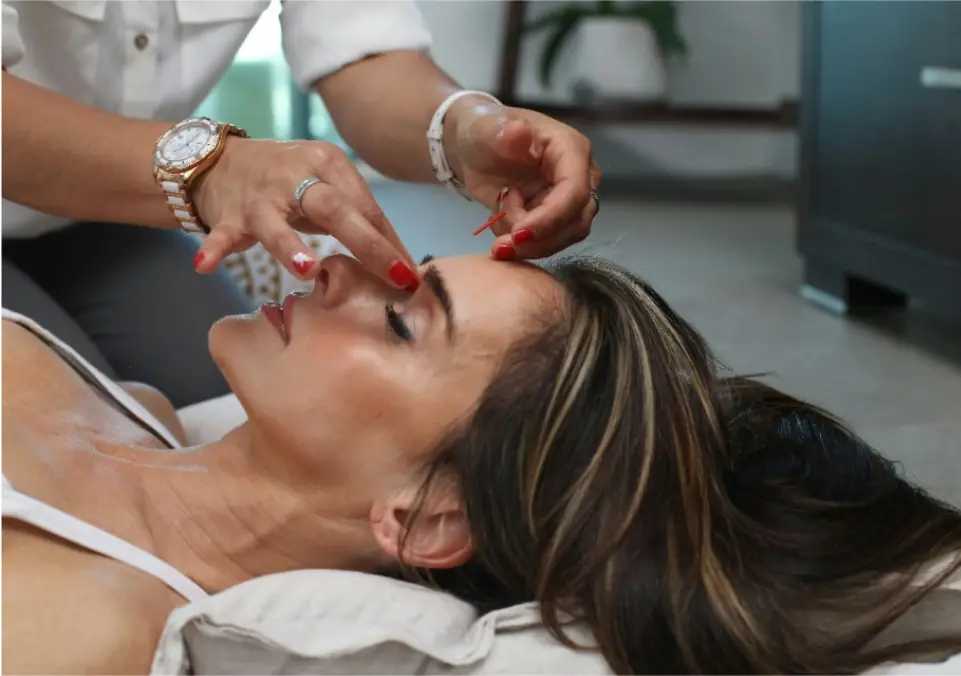
Hands at work during a facial procedure in the laser room
Laser room
Candlelight in the Longevity Hub
Longevity Hub
Shelves in the clinic boutique
Boutique

C. Ottawa 1483, Providencia, 44630 Guadalajara, Jalisco, Mexico.

Block 05

Risks

This block is written to be read in full, not skipped. Every surgical procedure carries risks. Yours in particular are explained case by case at the assessment, and they are set out in writing in the informed consent you sign before surgery.

Who explains them
Dr. Alejandro Leal, in consultation, before anything is booked.
Where they are written down
In the informed consent you read and sign yourself.
What cannot be promised
A result. Results vary between individuals and no result can be guaranteed.
What are the risks of plastic surgery?
The risks of any surgery, plus those specific to the procedure: a reaction to anesthesia, bleeding, infection, seroma or fluid collection, haematoma, healing problems, changes in sensation, asymmetry, contour irregularities, venous thrombosis, and the possibility of needing revision surgery. How often each one occurs changes with the procedure and with you, and that is the conversation held at the assessment.
How risky is a BBL?
It is the aesthetic procedure with the highest reported mortality of any, with historical estimates in a range of roughly one case in every 3,000 to one in every 15,000 procedures, from fat embolism. The risk falls substantially when fat is placed only in the subcutaneous plane and never in the muscle, which is the technique now considered safe. If you read a single risk figure before deciding, read that one.
What is thrombosis and why is it talked about so much?
It is a clot forming in a deep vein, usually in the leg, which in the worst case can travel to the lungs. The risk rises with immobility, with long procedures, with certain hormonal contraceptives and with long flights soon after surgery. That is why walking is advised from the first days, why preventive measures are used in the operating room, and why patients travelling from abroad are given a specific date from which flying is reasonable.
Could I end up asymmetric?
No body is symmetrical before surgery and none is after. Surgery works on the asymmetry you already have; it can improve it, not erase it. A contour irregularity can also appear while you heal. These are addressed at check-ups where appropriate, and in some cases with a touch-up once the result has matured.
What if I need a second surgery or a touch-up?
It happens in a proportion of cases and it does not mean something was done wrong: some results can only be refined once the tissue has finished settling. The terms of a possible revision are discussed before surgery, not afterwards, and it is one of the questions worth putting to any surgeon before you sign anything.
Can you guarantee the result?
No, and nobody should. Results vary between people because they depend on anatomy, skin quality, individual healing and the care taken afterwards. What can be done is to tell you clearly what range of result is realistic in your particular case before you go into the operating room, and to promise you nothing outside that range.
Every surgical procedure carries risks. Results vary between individuals and no result can be guaranteed. The risks specific to your procedure are explained at the assessment and are set out in writing in the informed consent you sign before surgery.

Block 06

If you are coming from abroad

The whole process, in order, with the stay calendar and the flight home, is on the international patients page →

How do I book from abroad?
Start with the booking form and give us your country, your city and your time zone. The order after that is fixed: a video consultation in your hours, then a written quote in Mexican pesos, then studies done at home and reviewed here, then a surgical date — and only then do you buy flights and book lodging around the stay you have been given. No flight is booked and no deposit is asked for until you have that written quote in your hands. The full sequence is set out on the international patients page.
What time zone does the clinic run on?
Guadalajara is on GMT-6 all year and does not change for daylight saving. That puts us on the same clock as Chicago and Mexico City, one hour ahead of Los Angeles, one hour behind New York and Toronto, and six hours behind London. Because Mexico does not move its clocks and most other countries do, the gap between your city and ours shifts by an hour when your own country changes — which is why every confirmation we send states the time in both zones.
What language is the consultation in?
Consultations can be conducted in English. Say so when you book and it is arranged for the video call and for your visits in Guadalajara, including your written quote and your post-operative instructions in English. You can write in English on WhatsApp and through the forms on this site as well.
I live in another country. Can the first consultation be done remotely?
Yes. The initial assessment is done by video call and is scheduled in your time zone, not ours. Your case is reviewed, your questions are answered and it is established whether you are a candidate. The in-person physical examination happens when you arrive, before surgery, and that is what confirms the plan.
Will I have the price before I buy the flight?
Yes, and that is the correct order: a closed written quote first, the flight second. Buying tickets before you have the plan and the figure is how people end up travelling to a surgery that was not the right one, or that cost something else.
How many days do I have to stay in Guadalajara?
For body contouring the typical stay is ten to fourteen days, covering the in-person assessment, surgery, the check-ups, suture removal where it applies, and clearance to fly. Minor procedures need fewer days. The full day-by-day calendar is on the international patients page.
When is it safe to take the flight home?
The date comes from your surgeon at a check-up, not from your airline's calendar. The reason is the risk of thrombosis: the immobility of a long flight soon after surgery is exactly the combination to avoid. You are also told what to do during the flight, including moving regularly and using compression.
What if I have a complication once I am back in my own city?
You are given your clinical summary and the detail of what was done, so that any doctor who sees you knows exactly what they are dealing with. Remote follow-up continues by video call and by message, and where the case calls for it, care is coordinated where you are. This is explained before you travel, not once it has happened.
What if my question needs the doctor and not the front desk?
Questions about the process — how a stay works, what to bring, availability, what a consultation involves — are answered by the team, the same business day during Guadalajara business hours. Anything that is clinical judgement, such as whether a procedure suits you or what your result could reasonably be, is not answered from a photograph or a message: it goes to Dr. Leal in a consultation, and the video call is scheduled in your time zone. If you are already a patient, use the direct channel you were given when you left. If it is urgent — breathlessness, chest or calf pain, fever, a wound that opens, heavy bleeding — go to a doctor or an emergency room where you are first, and tell us afterwards.
The Guadalajara skyline at dusk

Guadalajara, Jalisco

GMT-6 all year, with no daylight saving change. Every appointment is confirmed with the time in both zones.

Block 07

Without surgery

Can skin really be tightened without surgery?
Up to a point, and that point is the thing to understand before you pay for anything. Radiofrequency and microneedling technologies work on mild to moderate laxity and on skin quality. Once skin hangs and there is excess tissue, no technology removes it: there the honest answer is surgery or nothing. Telling you otherwise would cost you money and time without giving you the result.
What is the difference between Morpheus8, BodyTite and FaceTite?
They do different things and they are not interchangeable. Broadly: Morpheus8 works from the surface with microneedling and radiofrequency on the quality and firmness of the skin; BodyTite works underneath the skin on body areas; FaceTite is the equivalent for the face and neck, and AccuTite is the version for small, delicate areas. Which one applies depends on the area and the degree of laxity, not on which one is fashionable.
How many sessions do I need, and how often?
It depends on the technology and on your starting point: some are planned as a single session with maintenance afterwards, others as a scheme of several sessions weeks apart. The number is set at the assessment in the laser room. Be wary of anyone who sells you a number of sessions without having looked at your skin.
Do non-surgical treatments hurt, or leave marks?
They are done under local or topical anesthesia depending on the technology, and most allow a return to normal activity fairly quickly. There can be redness, swelling or small entry points for a few days, and there are aftercare and sun-protection instructions that have to be followed. These are not procedures without consequences; they are medical procedures with less time out.
What does the Longevity Hub do, and how is it different?
It is the maintenance unit: fifteen treatments directed by plastic surgeons, among them biostimulators, facial rejuvenation, body contouring and regenerative medicine. Its job is not to replace an operating room, but to hold a result already achieved over time and to look after people who do not yet need — or no longer need — surgery.

Still have a question?

Then bring it
to the consultation.

Sixty minutes with Dr. Leal, with your list of questions in your hand. You leave with a plan, a written quote and a straight answer about whether surgery makes sense for you at all.

WhatsApp Book a consultation